Author name: jahanaserin4@gmail.com

SMM

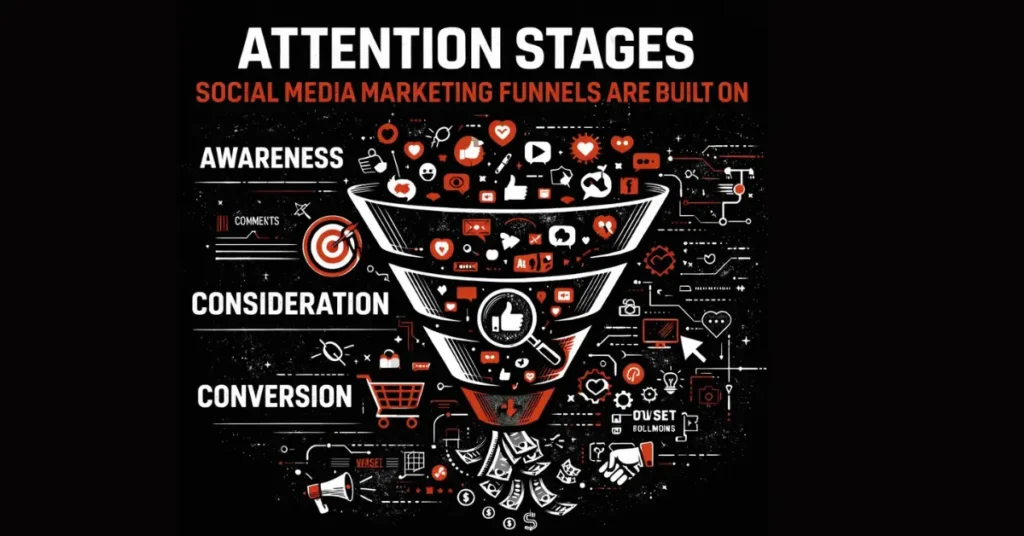
Social Media Marketing Funnels Are Built on Attention Stages

Social Media Marketing Funnels Are Built on Attention Stages     Most people believe that SMM is about regular posting, adding followers, and getting likes. In fact, successful social media marketing has little in common with posting-it’s all about managing attention. Every user on social media is going through different attention stages, and your content needs to walk them through step by step. This is where the concept of social media marketing funnels comes in-not as rigid steps, but transitions of attention. If you understand how attention works, you don’t have to chase algorithms. It’s the algorithm that will follow human behavior. What’s a Social Media Marketing Funnel? A social media marketing funnel is a path that a user goes through from: But unlike traditional funnels, SMM funnels are not linear. People do not go step by step. They go by how much attention they would want to pay to you. That’s why the attention stages are more important than tactics. The Value of Attention: A Look at Social Media & Attention Economics On social media, the user is: Therefore, attention must be earned before conversion, trust, and interaction can occur. Social media favors content that is: What this means is that the quality, rather than the quantity, of attention is what matters The 4 Stages of Attention on Social Media Marketing Funnels1️⃣ Cold Attention Stage (Discovery Stage User mindset: ‘I don’t know you, and I’m not looking for you.’ At this stage: Such content includes: Goal: Big mistake: At this stage, selling will choke your funnel. 2️⃣ Warm Attention Stage – Familiarity Stage User mindset: “I’ve seen this person/page before.” Here: Content that works here: Objective: This is where consistency in content plays a major role. 3️⃣ Trust attention stage (Authority Stage) User mindset: “They know what they’re talking about.” Now users: The following are examples of content that work: Goal: Trust isn’t based on claims, but on clarity and repetition. 4️⃣ Action Attention Stage (Conversion Stage) User mindset: “I’m ready to take the next step.” Barely one in a thousand attains this level, but such persons are the most precious. What kind of content might be useful in: Goal: The modern SMM funnel will normally conclude with any of the: Why Most Social Media Marketing Fails Most failures happen because: This breaks the funnel. Common mistakes when it comes to creating a funnel in ClickFunnels: How Algorithms Support Attention-Based Funnels Social media algorithms monitor: These are attentional cues. When the user: The algorithm pushes your content more. Algorithms don’t rank content, they scale attention. Platform-Wise Attention Funnel Behavior Instagram Facebook LinkedIn No funnel can be replicated across sites. Why Attention-Based Funnels Are an Improvement Over Regular Funnels Traditional funnels: Attention-based Funnels: That is why there is a shift from traditional funnels in current digital marketing. How Businesses Should Use This Funnel Model To Apply This: Simple rule: Attention first → Trust next → Action last Conclusion: Social Media Marketing is no longer a task where one needs to post every day or keep updating posts based on the latest trends When you understand attention stages: Algorithms operate in The Social Media Marketing Funnel is an attention-based, not tactic-based, framework.  
Digital Marketing

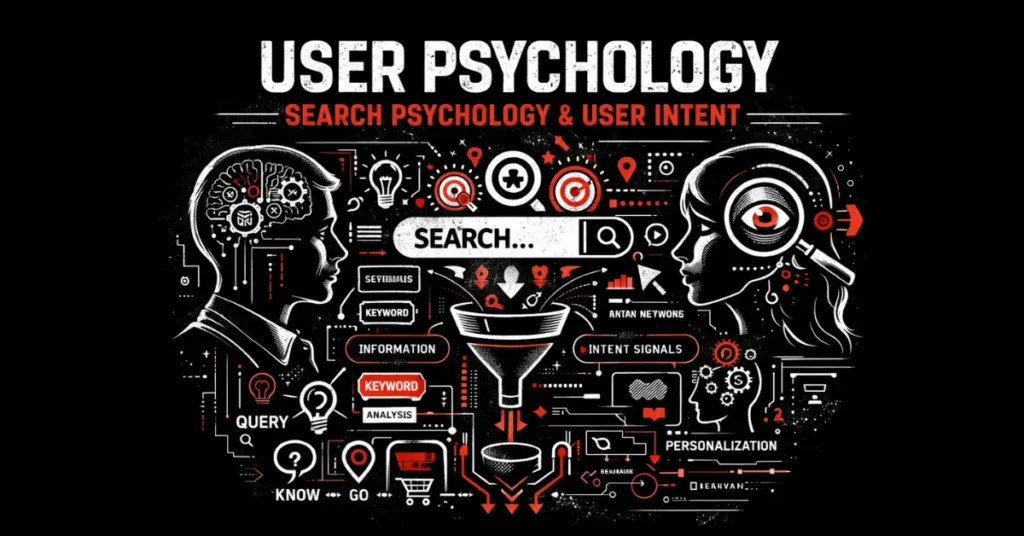
Search Psychology & User Intent

    What People Think Before They Search, Click, and Convert The online marketing industry has been undergoing a radical transformation in the past few years. Originally, doing well in the search engines was based on keyword analysis, backlinks, and various tricks. However, nowadays, doing so successfully through these tactics isn’t sufficient anymore. The search engines, social media, and online users too keep changing. This is where Search Psychology and User Intent come into play. Each search, click, and website visit involves a human thought process. Users are not searching aimlessly. Users are searching when they are curious, confused, weighing their options, or when they are ready to make a decision. That’s what takes marketing from average and leads to growth. Search psychology refers to why people actually search, while user intent refers to what they are trying to find. This understanding of both aspects ensures that your content is not only relevant and visible but also effective. The Human Mind Behind Each Search Each digital action has a starting point in the mind. The individual types a word on Google or clicks on a social media post after a trigger. The trigger may be a problem, a wish, a fear, or a temptation. Search engines are no longer merely searching for words; they are deciphering the signals coming from the mind. For instance, people searching for “best digital marketing services” are looking for more than just information. They are probably considering options, assessing trust, and ready to make a decision to hire a service provider. This mentality allows a marketer to craft content that will communicate effectively with what a user is feeling and anticipating. “Search psychology can unravel the invisible thinking in search.” Here, search psychology concentrates on emotions, decision stages, as well as patterns of behavior, as opposed to actual search keywords. “What is User Intent?” Explained SimplyIn a nutshell, User intent is the purpose or reason for a search. This defines the purpose a user has in mind when they search for something online. Modern search engines consider intent rather than the actual search term because intent leads to greater customer satisfaction. intents have varying levels. Users will move between the intents in a natural manner as they advance in the journey. A beginner might begin the journey using the learn, compare, then decision intents. Common user intent may include the following: It’s very important to be aware of the intent of content. Content with mismatching intent can get lots of traffic but won’t be able to convert or retain people’s attention. Why Keywords By Themselfs Are’nt Enough Anymore When it came to SEO in the past, it was all about putting the right keywords in the right locations. But looking at SEO from 2016 and beyond, it seems that’s not enough. Two people searching for the same keyword can be looking for two entirely different things. The search engines currently evaluate: What this means is that the design of the content needs to be created with meaning rather than repetition. Search psychology assists the marketer in overcoming the obsession with keywords and achieving the objective of answering actual questions. How Search Psychology Applies to Content Performance When the content is relevant to the psychology of the users, it ends up performing well without pushing for visibility. Visitors tend to spend more time, read for longer, and click as a result of their normal behavior. Search psychology affects: Data that has context feels like effortless reading. It answers questions before a person asks them. This builds a feel of familiarity and trust, which results in improved conversions The Role of Emotion in Search Behavior A search is not a purely logic operation. Emotions play a very important role. People search when they are uncertain, excited, worried, or driven. A business owner searching for assistance with marketing may both confuse and worry him. The content addressing these emotions inspires trust from the very start. Emotionally intelligent communications do not manipulate. They reassure, guide, and educate. Search psychology is how you can unlock the triggers for emotions and react accordingly, rather than manipulating. That is why some content is relative, but some content is very robotic. That is a matter of understanding the person behind the search. AI and the Evolution of Search Intent AI-powered search transformed the interpretation of intent. Search and AI now have meaning, context, and relationship understanding at an altogether new level. They understand not just what the user types but how they consume content. That makes search psychology even more important than ever: AI systems reward content that feels human, helpful, and in context; therefore, keyword-heavy but shallow content slowly moves into obscurity. The Necessity of Intent-Focused Content in For instance, for businesses, user intent is not only useful for SEO but also for conversion strategies. By targeting intent through content, users get a sense of being understood without actual interaction. Intent-driven content is useful for businesses: Rather than chasing after traffic, businesses attract people who are already aligned with what they offer. My Personal Philosophy of Search Psychology My strategy is based on understanding user behavior rather than tools. I analyze how users search, what stage of the buying cycle they’re in, and what they’re trying to accomplish next. My strategy focuses on relevance rather than optimization. By integrating human understanding and analysis capabilities of artificial intelligence, the pattern starts emerging. In turn, it contributes towards developing content that engages the user in a way that is also comprehensible for the search engines. Search Psychology as a Long-Term Strategy Trends emerge. Algorithms develop. Tools mature. However, human psychology holds steady. Humanity will forever crave clarity, comfort, and validation. The search for psychology centers on these timeless truths. This makes it a strategy rather than a temporary approach. The fact that the content is based on intent makes it long-lived since it is not affected by updates. This is because it is based on human behavior. Conclusion:Think the Way the User Does,

SEO

Algorithm Decoding Lab

    How Platforms Decide What Gets Seen, Shared, and Sustained In the digital world, visibility is currency. Every business, creator, and brand wants to be seen, yet only a small percentage of content ever reaches its full potential. Most people blame algorithms when reach drops or engagement slows, but algorithms are not designed to work against us. They are designed to manage attention. Understanding this simple truth changes how digital marketing works. Algorithm decoding is not about hacking systems or chasing loopholes. It is about understanding how platforms think, how users behave, and how these two connect. When content aligns with this connection, visibility becomes consistent instead of unpredictable. Understanding the Real Role of Algorithms Algorithms exist because platforms must protect user experience. Google, Instagram, and Facebook handle enormous volumes of content every second. Without a system to filter and prioritize information, users would be overwhelmed. Algorithms step in to decide what content deserves attention based on relevance and value. At their core, algorithms are decision-making systems. They observe patterns, compare outcomes, and adjust visibility accordingly. They do not judge content emotionally or creatively. They simply ask one question repeatedly: Does this content serve the user? When the answer is yes, reach increases. When the answer is no, content quietly fades. Algorithms Follow People, Not Creators One of the most misunderstood aspects of digital marketing is the belief that algorithms control everything independently. In reality, algorithms follow human behavior very closely. Every action a user takes becomes a signal. These signals are subtle but powerful. They include how long someone stays on a page, whether they scroll further, if they watch a video till the end, or if they interact naturally. Algorithms read these behaviors as feedback and adjust visibility in real time. Some of the strongest behavioral signals include: This means that content performance is not random. It is a reflection of how well the content connects with its audience. How Search Engines Think Differently Search engines like Google are deeply intent-driven. Their primary goal is to provide the best possible answer to a user’s question. This is why search visibility depends less on keywords alone and more on how well content satisfies intent. When users land on a page and quickly leave, Google understands that expectations were not met. When users stay, read, and explore further, Google interprets this as success. Over time, pages that consistently meet user intent gain trust and authority. This is the foundation of long-term SEO. It is not about forcing rankings but about earning them by delivering clarity and value. Social Media Algorithms and Attention Economics The attention economy refers to, The pace of operation of social media sites is quicker and involves the same principles. Instagram and Facebook are mostly attention economics platforms. The algorithms of these platforms are aimed at publishing content that engages a user and keeps him or her actively on the site. That content which invites interactions, grabs attention, or triggers conversations will be valuable to the system. This explains why early engagement is important, not a trick but a trigger of relevance. If people interact easily, their content gets a greater reach through algorithms. Another aspect of social platforms is consistency. Pages that stick to one theme or niche and provide quality content will earn the algorithm’s favor. Unrelated posts will lead to fleeting boosts in popularity, whereas consistency will lead to long-term growth. Why Guessing is Ineffective in Digital Marketing Many marketers struggle because they actually use guessing as their strategy. Algorithmic decoding eliminates guesswork. Guesswork is eliminated and replaced with observation. Once you recognize how platforms decode behavior, you can create content that seamlessly integrates into the platform rather than competing against it. This paradigm shift makes the field of marketing more strategic instead of reactive. The Core Principles of Algorithm Decoding Algorithmic decoding has been founded on a set of basic concepts, which remain valid despite changes in platforms. All these concepts provide guidelines on how content should be generated. Among the key guiding principles are: When content is created with the above guidelines in mind, the algorithms will react positively because the users react positively. Human Behavior is the Constant Platforms make algorithm updates very often, but humans move slowly in terms of behavior changes. Still, humans look for clarity, answers, and valuable content. They still look for relevance and authenticity. That’s exactly why understanding the audience is more valuable than understanding updates on the different platforms. When the material itself takes into consideration the needs of the users, even updates on the algorithms become more manageable. The system adjusts, but there’ll still be something solid to build on. Decoding of algorithms is based on this constant. Rather than being concerned with updates, strategies that outlive change are developed. I began my research on algorithm decoding My method of understanding platforms starts with understanding the users. I examine how audiences interact with the content. I examine the trends rather than just the numbers. When humans understand AI analysis, it will be easier to determine the successes and failures. This way, content is purposefully organized. Each piece has a purpose, is relevant to user intent, and is consistent with platform behavior. Thus, the end result is a sustainable growth that happens naturally. Importance of Algorithm Knowledge for Organizations Understanding the algorithm has become optional no more, especially in the context of businesses. The direct results of algorithmic knowledge can be noticed in the form of more visibility, trust, and increased growth. When businesses synchronize their content with the logic of the algorithm, the following benefits accrue to them: Final Perspective: Visibility is Eearned, Not Given Algorithms are not obstructions. They are reflections of how people respond to the content. If value has been found, the systems respond. If a lack of clarity and relevance, visibility will be reduced. Algorithmic decoding is dealing with the correlation between the content and the users for whom the content is relevant. These two aspects don’t have

Scroll to Top